What Is Japandi Style — and Why Is It the Best Furniture Choice for Summer 2026?
There are design trends, and then there are design philosophies. Japandi is the latter. While most aesthetics arrive loudly — bold colours, maximalist arrangements, statement pieces demanding attention — Japandi does the opposite. It walks into a room quietly, removes everything unnecessary, and leaves behind something that feels, almost inexplicably, exactly right.
In 2026, that philosophy has never been more relevant. And in summer, when the instinct to simplify is at its strongest, Japandi becomes the best furniture decision you can make for your home.
Japandi Style - Best Furniture Choice for Summer 2026?What Is Japandi Style — and Why Is It the Best Furniture Choice for Summer 2026?
What Is Japandi Style?
Japandi is a combination of Japanese minimalism and Scandinavian warmth. On the surface, the two traditions seem different — Japanese interiors are defined by restraint, negative space, and a deep reverence for natural materials; Scandinavian design by functionality, warmth, and the belief that everyday objects should be beautiful as well as useful. In practice, they share more than they differ. Both prize craftsmanship over ornamentation. Both favour natural wood and neutral palettes. Both understand that a room with less in it can feel more complete than one with more.
The result of combining them is a design philosophy built on four principles: low profiles that sit close to the ground, natural materials — oak, linen, cane, stone — that age beautifully, clean lines with subtle handcrafted detail, and a palette of warm neutrals that create calmness.
Why Japandi Is the Best Furniture Choice for Summer 2026
Summer living has its own set of demands. Rooms need to feel lighter, more open, more connected to the natural world outside. Heavy furniture feels wrong in the long light of a summer afternoon. Maximalist arrangements feel exhausting when the heat is already asking something of you. The design instinct that summer calls for — simplicity, airiness, natural texture, calm — is precisely what Japandi delivers, every single day of the year.
This is not a coincidence. Japandi's roots in both Japanese wabi-sabi — the acceptance of imperfection and impermanence — and Scandinavian hygge — the pursuit of comfort and contentment in everyday life — make it uniquely suited to a season that invites slower, more considered living. A Japandi room in summer does not compete with the season. It extends it indoors.
For American homes in particular, the Japandi aesthetic offers something that has been missing from mainstream furniture design for years: furniture that is genuinely built to last, designed with restraint, and beautiful in a way that does not depend on trends to sustain it. In a market saturated with fast furniture and disposable design, Japandi is the best choice for anyone who wants to build a home — not just decorate one.
How to Build Your Room the Japandi Way
The Japandi bedroom begins with the bed frame. Everything else — the nightstands, the textiles, the objects on the surface — follows from that decision. And in a design philosophy that prizes low profiles, natural wood, and clean lines above all else, the bed frame is where the philosophy either holds or falls apart.
The Kyoto King Bed from World Casa was designed around Japandi principles from the ground up. Its low-profile upholstered headboard with vertical channel detailing on a softly rounded form embodies the aesthetic's core tension: structured but soft, considered but never cold. Tapered round oak legs keep the profile grounded and light simultaneously.
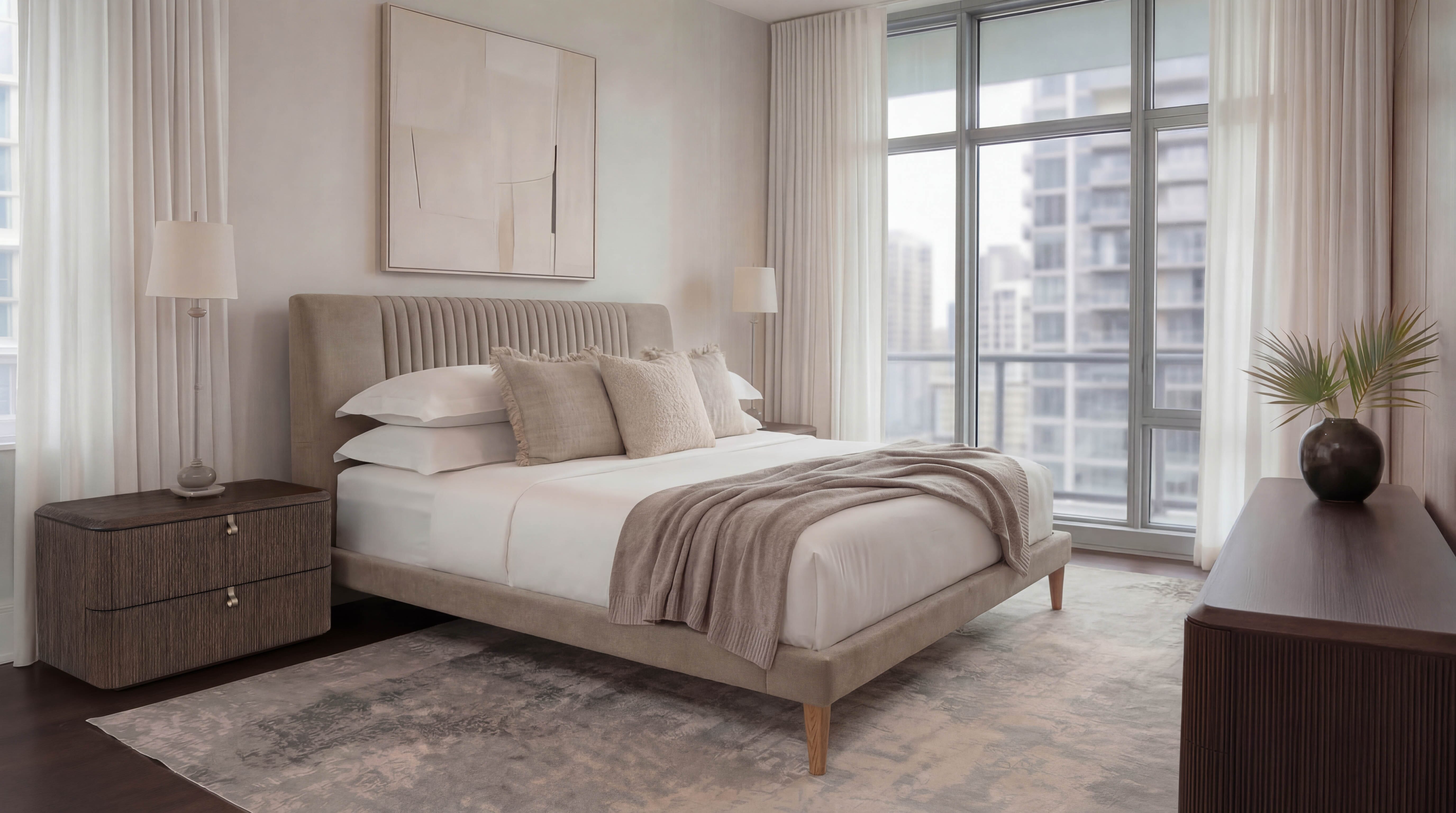
The Kyoto King Bed from World Casa is available in taupe fabric and ecru leather
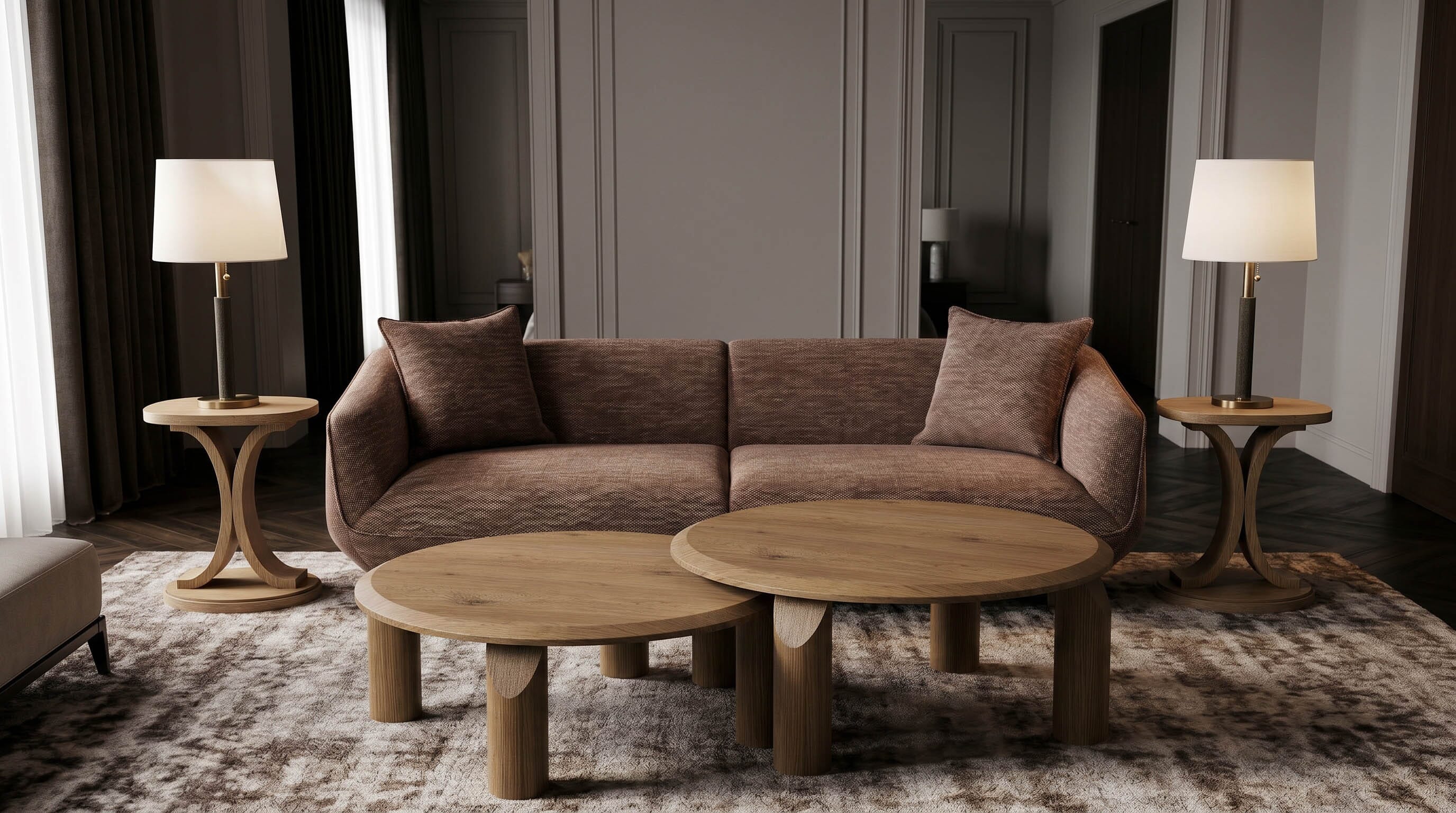
From the bed, build outward. A cocktail table with a low Japanese-inspired profile and cylindrical oak legs — like the Vienna Small Round Cocktail Table from World Casa — extends the Japandi language into the centre of the room, its smooth oak veneer surface and grounded form creating continuity between the bed and the living space.
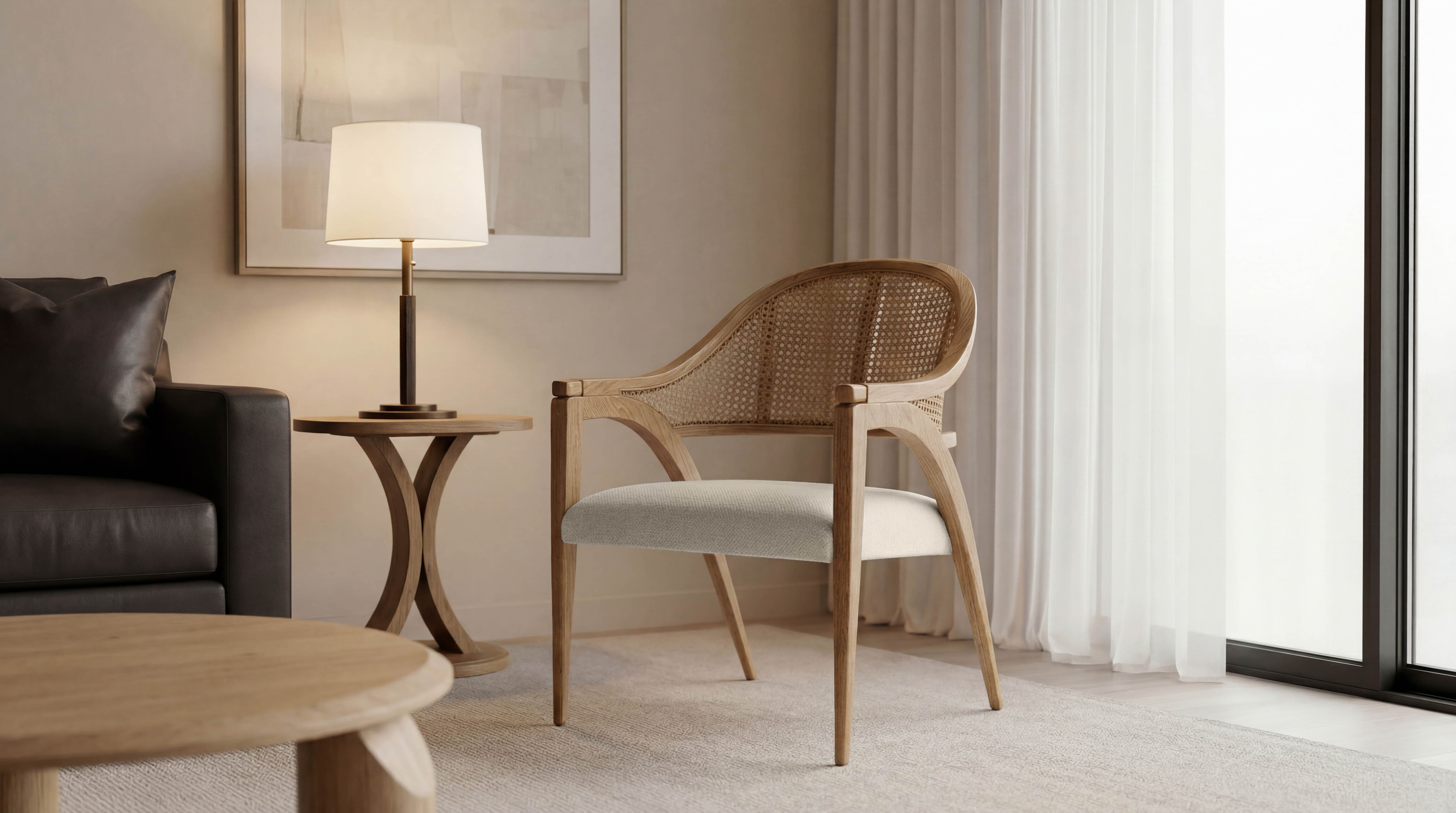
For seating, the Japandi accent chair is defined by the same principles as everything else: an oak frame, a woven cane back that introduces organic texture and genuine breathability — particularly valuable in summer — and a subtly upholstered seat that provides comfort. The Kyoto Accent Chair from World Casa is built around exactly this brief.
The Japandi Palette for Summer
Japandi's colour palette is one of its most immediately recognisable features — and one of its most useful. Warm whites, oatmeal, stone, taupe, soft sage, and deep mocha brown form the foundation. These tones create a room which feels calm in any light, at any hour of the day.
For summer, the lighter end of the Japandi palette works particularly well. Oatmeal linen bedding against a taupe fabric headboard. A natural oak nightstand beside ecru leather. Cool white walls that reflect the long summer light back into the room. The palette is warm enough to feel alive and neutral enough to never feel heavy.
The rule of thumb: choose three tones from the Japandi palette and let the natural materials — oak, cane, linen, stone — introduce the texture and variation. The restraint is the point.
Build Your Room. Then Leave It Alone.
The highest compliment a Japandi room can receive is that it looks like it has always been there. Not styled, not arranged, not decorated — simply resolved. Every material chosen for what it brings. Every piece earning its place through function and form equally. Nothing added that does not need to be there.
That is what Japandi offers the summer home of 2026. And it is why, of all the furniture choices available this year, it remains the most considered, the most enduring, and the most worth making.
Explore the World Casa Japandi collection — including the Kyoto King Bed, Vienna Cocktail Table, and Kyoto Accent Chair — at: wolrdcasa.com